Will Free TV Channels on OTT Platforms Be Shut Down? TRAI May Decide After Complaints From Cable and DTH Companies
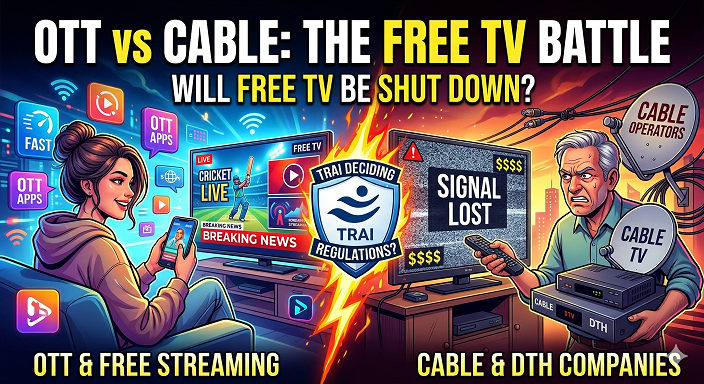
If you watch free live TV channels or cricket matches on your smart TV or mobile through OTT apps, this convenience may soon face new regulations in India. Cable and DTH operators have approached the Telecom Regulatory Authority of India (TRAI), raising concerns over the rapid growth of free internet-based TV services, commonly known as FAST (Free Ad-Supported Streaming TV).
According to these companies, the increasing availability of free live TV channels on OTT platforms is leading to a sharp decline in cable and DTH subscribers. As a result, TRAI is now reportedly considering new rules that could significantly impact free TV streaming services in India.
Why Are Cable and DTH Companies Concerned?
Major DTH and cable providers, including platforms like Tata Play and Airtel Digital TV, argue that consumers are disconnecting traditional cable connections because similar content is available online for free.
Industry reports suggest that India’s DTH subscriber base dropped from approximately 6.66 crore users in December 2022 to around 5.09 crore users by December 2025. One of the primary reasons cited is that many TV channels and sports broadcasts that traditionally required paid subscriptions are now freely accessible through OTT and streaming apps.
Cable and DTH operators are demanding a “same content, same rules” policy. They believe that if OTT platforms are broadcasting television-like content, they should also be subject to the same regulations, licensing requirements, and fees. Reports indicate that these companies want internet TV platforms to pay licensing fees that could reportedly reach ₹10 crore, along with compliance under existing broadcasting laws.
What Is the OTT Industry Saying?
OTT and digital streaming companies strongly disagree with these demands. According to digital platforms and industry bodies, OTT services are internet applications, not traditional television broadcasters.
Companies such as Jio Platforms and other digital associations argue that free streaming channels available online are fundamentally different from satellite or cable TV broadcasting. They believe the regulatory framework designed for cable networks and satellite transmission should not be imposed on modern internet-based services.
Their position is that OTT platforms function similarly to platforms like YouTube and internet apps, where content is delivered over broadband networks rather than through conventional broadcast infrastructure.
Smart TV Brands Also Enter the Debate
Smart TV manufacturers including Samsung and LG Electronics have also reportedly entered the discussion. Their stance is that they merely provide app ecosystems on their televisions and should not be held responsible for the type of content streamed through third-party applications.
What Could This Mean for Viewers?
India currently has more than 10 crore connected TV households, while the number of users consuming free internet-based TV channels is estimated to have crossed 14 crore.
If TRAI rules in favor of cable and DTH operators, several changes could follow:
- Free live TV channels on OTT apps may be restricted or discontinued.
- Sports broadcasts currently available for free could move behind paywalls.
- OTT platforms may be required to obtain broadcasting licenses and follow stricter regulations.
- Users may eventually need paid subscriptions to access content that is currently free.
At the moment, no final decision has been announced, but the debate highlights the growing competition between traditional television operators and internet-based streaming services in India’s rapidly evolving digital entertainment market.